
Asphalt Sealcoating
Sealcoating is the single most cost-effective thing you can do to extend the life of your asphalt. It acts as a sacrificial wear layer, absorbing the brunt of traffic friction, sun oxidation, water penetration, and chemical spills that would otherwise cause the underlying asphalt to rapidly degrade.
Asphalt is held together by a petroleum binder. From the day it is laid, ultraviolet light, oxygen, and water begin breaking that binder down — the surface fades from rich black to gray, becomes brittle, and starts to unravel. Gas, oil, and de-icing chemicals accelerate the damage.
A professionally applied sealcoat replenishes the surface with a tough, flexible barrier that locks out water and UV, resists fuel and oil spills, and takes the daily abuse of tires so your pavement doesn’t have to. It also restores a uniform, deep-black finish that dramatically improves curb appeal — striping pops, and the whole property looks cared for.
For most surfaces in Michigan’s freeze-thaw climate, we recommend sealcoating every 2–4 years depending on traffic and sun exposure. Paired with timely crack filling, a regular sealcoating program can more than double the useful life of your asphalt at a fraction of the cost of replacement.
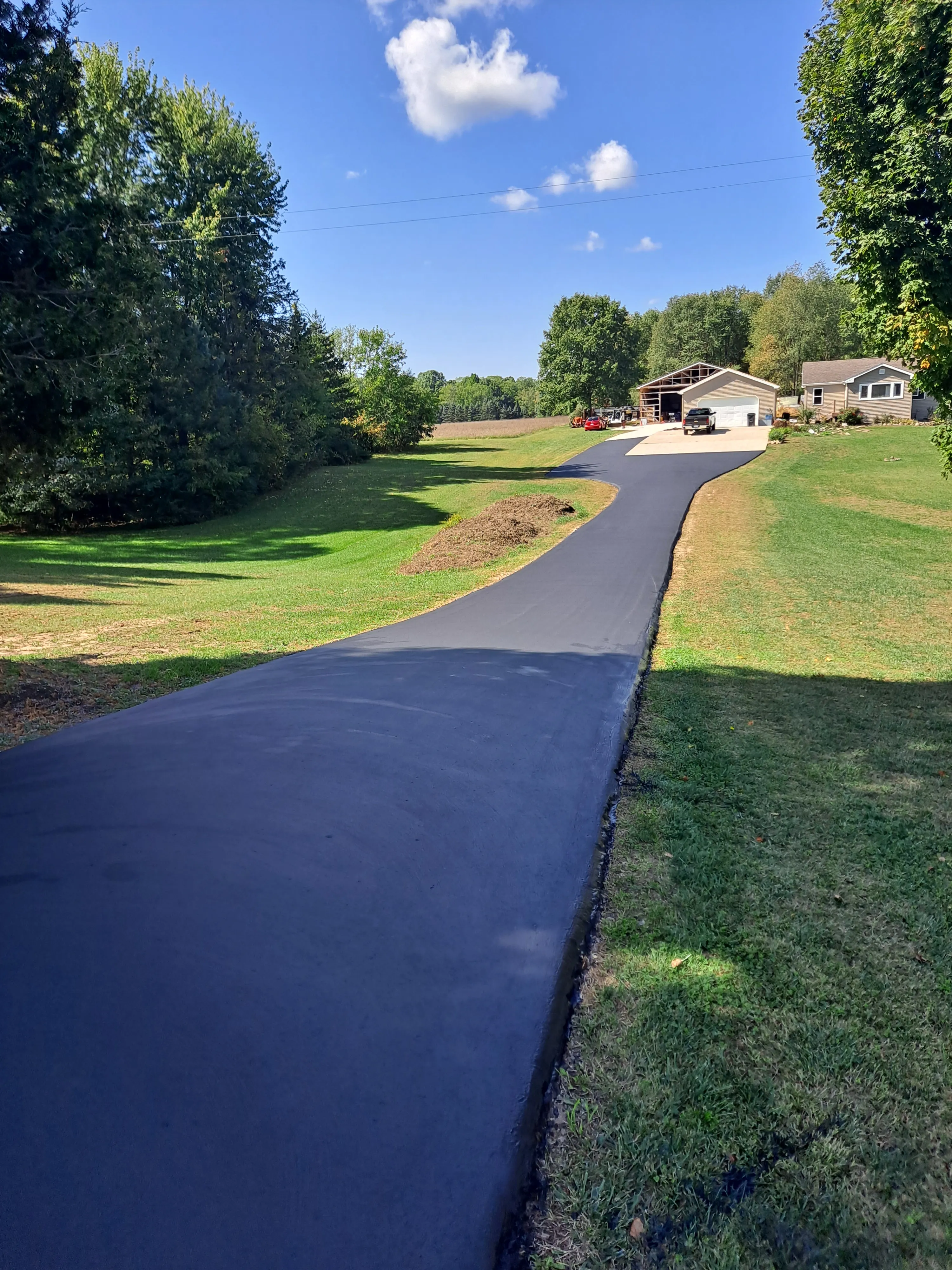
The Benefits
Why It’s Worth It
Blocks water & UV
Seals the surface against the two forces that age asphalt fastest — moisture and sun oxidation.
Resists chemicals
Stands up to gas, oil, and de-icing salts that dissolve unprotected asphalt binder.
Slows wear
Acts as a sacrificial layer that absorbs traffic friction instead of your pavement.
Restores curb appeal
Brings back the deep, uniform black of new asphalt and makes striping stand out.
Saves money
Pennies per square foot compared to the cost of repaving — and it delays that day by years.
Our Process
How We Do It
- 1
Inspect & prep
We evaluate the surface, treat oil spots with primer, and repair cracks so the sealer bonds properly.
- 2
Clean thoroughly
The entire surface is power-cleaned of dirt and debris — a clean surface is everything for adhesion.
- 3
Apply sealer
Commercial-grade sealer is applied evenly by squeegee, broom, or spray for full, consistent coverage.
- 4
Cure & reopen
We block off the area while it cures — typically 24–48 hours — then you’re back in business with a like-new surface.
Related Services
Often Paired With
Crack Filling
Polymer-modified rubber, melted to 400°F and poured into prepared cracks — a flexible, watertight seal that stops freeze-thaw damage.
Infra-Red Patching
Radiant heat melts damaged asphalt back to a workable state and welds in new material — a seamless repair with no joints for water to attack.
Line Striping
Crisp, highly visible markings for parking stalls, fire lanes, crosswalks, and ADA compliance — the finishing touch on a professional lot.